
With the end of the year drawing near, numerous individuals start reflecting on issues they've put off for a long time. Have I led a fulfilling life thus far? Were there alternative paths available? What direction should my life take moving forward? Although life might seem perfect when following an orderly plan, this is not always how things unfold. Individuals find themselves wondering, "Why isn't my life proceeding as expected?" and pause before deciding their next step.
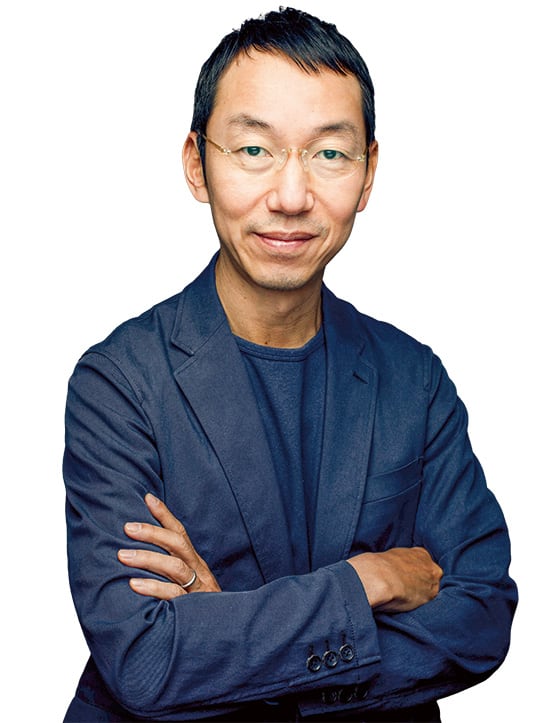
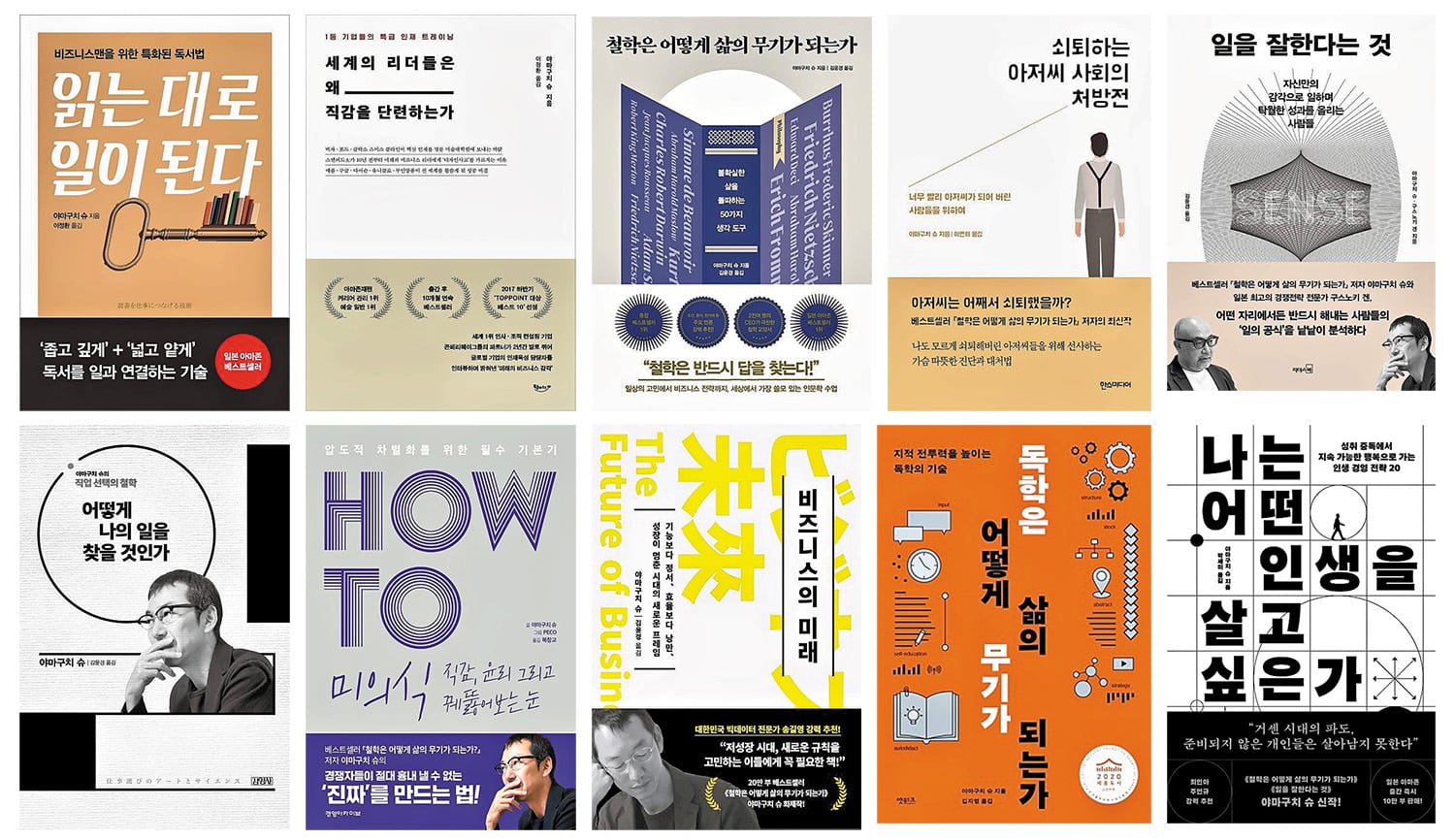
Yamaguchi Shu (55) provides insight for individuals facing challenges. He believes that life also needs a strategic approach. As a well-known Japanese management strategist, he states, "Life constantly presents unforeseen circumstances and numerous difficulties. It is essential to manage these scenarios and discover resolutions." Starting his professional journey at Japan's leading advertising agency, Dentsu, and later holding positions at the Boston Consulting Group, AT Kearney, and Korn Ferry Hay Group, he currently heads the consultancy Leibniz Lab and serves as an author. His work earned him attention in South Korea following the success of his 2019 bestselling book *How Philosophy Becomes a Weapon in Life*.
After guiding many businesses, he refers to life as "the most challenging yet fascinating endeavor—one where outcomes often deviate from expectations, yet perseverance remains essential."
◇Living Life as an Extended Endeavor
- Do you think one's private life also requires a strategic approach?
Operating a business and handling personal life share many similarities. They both involve unpredictability, difficulty in forecasting outcomes, and a desire for success. Just as businesses benefit from strategic planning to thrive, should not life also demand such approaches?
His initial approach to life was "setting goals." Guided by the belief that "a proper strategy begins with the correct objective," he outlined the aim of the "life project" as: "Striving for a lasting and fulfilling existence through wise allocation of time, and leading a life such that one can reflect, 'It was a well-lived life,' even if death comes suddenly."
- What was the reason behind setting this objective?
Numerous individuals expend their efforts attempting to alter others, institutions, or societal structures — elements outside of their influence. Nevertheless, the sole aspect within our power is time investment, which deserves our attention. Research indicates that aspects such as wealth, social standing, and recognition hold little direct connection to a fulfilling life past a specific threshold. While these may serve as prerequisites for contentment, they ought not to represent the final objective. Additionally, considering the unpredictability of mortality, sustaining an enduring balance becomes essential. In my own experience, I previously aimed at objectives like "securing a substantial income" or "ascending to a prominent role within a corporation," yet upon attaining these, I did not perceive genuine joy. Contemplating "what I genuinely seek from my existence" guided me toward this current aspiration.
He categorizes common life philosophies into the Machiavellian style, focused on achieving financial and societal success, and the Rousseauan perspective, centered around personal freedom. He notes, "Neither provides the complete solution." He further mentions, "From my experiences, I've discovered that wealth doesn't ensure joy, and following your own rhythm doesn't consistently lead to satisfaction." He contends that true happiness comes from leading a balanced life that combines self-fulfillment with financial and social security.
- You utilized the 'life cycle curve' concept from marketing theory in your approach to life.
"Similar to how businesses or products experience cycles of introduction, growth, maturity, and decline, life too moves through distinct phases, each demanding varied mental approaches and behaviors. Attempting to gather rewards during spring—when you're meant to plant seeds—will not yield benefits come autumn." He draws an analogy between life and the four seasons: During spring (until about age 30), explore numerous opportunities; in summer (until roughly 50), concentrate on career development to build personal and social resources; in autumn (until approximately 70), broaden your range of involvement; and in winter (beyond 70), share knowledge with younger generations.
Life is a lengthy journey, yet it tends to pass unexpectedly fast when one remains constantly occupied. To prevent wandering without direction, having a long-range plan is essential." He argues that long-term logic holds greater significance than immediate reasoning in life. He challenges Japan's perspective which considers completing college, obtaining employment with a large corporation, and beginning work right away as a sign of success, labeling it illogical to join a company lacking experience or the ability to assess sectors. He likens life to an "adaptable strategy game," highlighting, "Adaptability is crucial. Create a plan, carry it out, and modify it based on circumstances.
◇Sustained Competitive Advantage Arises from Liberal Education
Shu Yamaguchi specializes in "work." He has authored multiple books about career decisions, working methods, and incorporating philosophical ideas into professional life. "Life consists of many choices, and selecting a career is a crucial decision that shapes the course of one's life," he states. "This choice affects how we interact with society and achieve our worth." He extended the concept that a company's lasting competitive advantage relies on proper positioning to individual lives.
—How is this applied?
The profit potential of individuals is also influenced by their position in the market. Competencies and talents that exceed demand tend to decrease in worth. Allocating time to popular credentials or academic qualifications is the least effective strategy.
He states, "No situation stays fixed permanently," referencing Ibuse Masuji's book *The Damned*, which tells the story of a salamander stuck in a shrinking rock gap once it became satisfied with its safe place. "Regardless of how appealing or cozy a position may seem, becoming too confident can leave someone exposed to shifts in their surroundings."
—What is the appropriate moment to change jobs or professions?
When progress slows down. When you experience feelings of 'monotony' or 'fatigue,' it's the right moment to change.
- What strategies help individuals thrive during the age of artificial intelligence? - How do people adapt and remain successful in an AI-driven world? - What methods allow someone to cope with advancements in artificial intelligence? - In what ways can one stay relevant amidst growing AI technologies? - What approaches ensure survival when facing the rise of artificial intelligence?
Steer clear of competition in domains where artificial intelligence performs best. AI is effective at discovering solutions to specified issues, yet people continue to shine in identifying problems and implementing resolutions. Looking ahead, individuals capable of formulating innovative inquiries and showcasing leadership will hold significant worth. The skill to ask insightful questions will play a vital role in converting AI-provided responses into tangible value.
- What methods can be used to improve the skill of asking questions?
Enduring values tend to remain significant through the years. In my view, true long-term competitive advantage stems from a background in liberal arts. These disciplines develop critical thinking abilities essential for making wise decisions in uncertain circumstances.
He emphasizes, "The standards used to assess your life must not come from anyone else. Reflect on 'What holds the greatest importance for me?' and 'What constitutes a fulfilling life according to my values?' Define your personal priorities. It's essential to have your own distinct approach."
—Many fear failure.
Approach the bat frequently and hit forcefully. Anxiety fades through consistent setbacks, which is unexpectedly challenging to maintain.
—What characterizes successful people?
Individuals who possess strong self-awareness and emotional responsiveness. While many strive to lead the 'ideal life' that others admire, what constitutes a good life for individual A may not be suitable for individual B. The responses to questions like 'Am I currently happy?' and 'In which moments do I experience joy?' hold true significance.
◇A Life Marked by Courage and Sincerity
Shu Yamaguchi's professional journey stands out. He studied philosophy at Keio University and earned a master's degree in aesthetics and art history. Following his time at an advertising firm, he transitioned into the consulting field despite not holding an MBA.
—Your major was not in business administration.
I didn't consider not having an MBA as a disadvantage since that kind of expertise isn't beneficial for consultancy work. Rather, beginning from scratch and using my own thoughts provided an advantage.
- You have written numerous books and delivered speeches. Do you consider yourself a workaholic?
I have never experienced burnout from working. Sometimes I take breaks or even miss work. I am more driven by curiosity than discipline, constantly exploring or pondering new ideas. I also appreciate fascinating subjects and find joy in exchanging what I discover.
He defines major life-changing decisions as "where to be," "who to be with," and "what to do." He believes each person has a specific location where they can most effectively showcase their individuality, which led him to relocate from Tokyo to Hayama (a neighboring beach community) when he was 45. The desire to reside close to the ocean surpassed his earlier focus on traditional markers of achievement. This relocation allowed him to stop working on weekends and dedicate more time to his loved ones. “This marked a pivotal moment in shifting toward becoming an independent researcher, writer, and speaker,” he mentions.
A well-known bibliophile, he developed a passion for reading via science fiction during his time in primary school. When questioned about his current reading habits, he states, "I scan hundreds of books annually and delve into around 50 in depth." He mentions the Bible as his "book that transformed my life."
—Is your latest book called *What Kind of Life Do I Want to Live*? What sort of life would you like?
I believe living isn't ever straightforward. No matter what happens, I hope to reflect on my past and feel proud of the authentic life I lived—free from embarrassment or remorse.
He points out that although using managerial strategies in life can be beneficial, unlike companies, life doesn’t have defined indicators for achievement or defeat. "What truly counts is the path itself, not the conclusion. The frequency with which you experience 'I'm grateful to be alive' during your lifetime — this cumulative feeling is the true gauge of existence."
For anyone reflecting on existence, he wishes to convey: "The past cannot be altered, yet its significance can be reshaped by the way you proceed ahead."



0 Komentar