
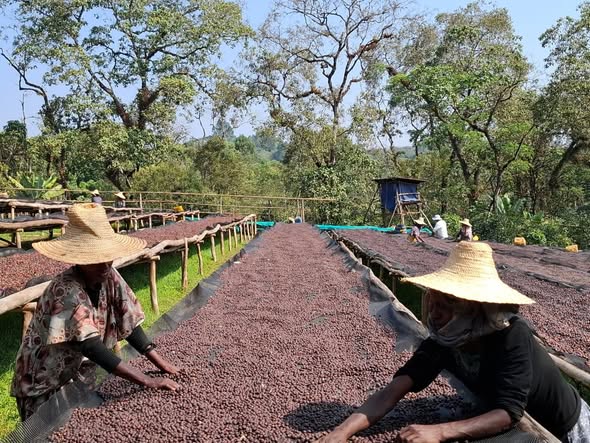
Addis Ababa, January 3, 2026 _The consistent growth in coffee output within the Jimma Zone of the Oromia Region is now playing a significant role in boosting tourist arrivals, according to local authorities.
This comment was made as Ethiopia achieves significant progress in coffee output and revenue from exports through countrywide industry changes that are transforming both farming and travel.
The Jimma Zone Agricultural Office stated that enhanced methods for developing coffee are enhancing farmers' lives and drawing tourists interested in personally experiencing Ethiopia's coffee culture.
The progress in Jimma occurs alongside the federal government's increased focus on upgrading coffee farming, enhancing product standards, and connecting coffee with travel as part of the nation's wider plan for economic and cultural advancement.
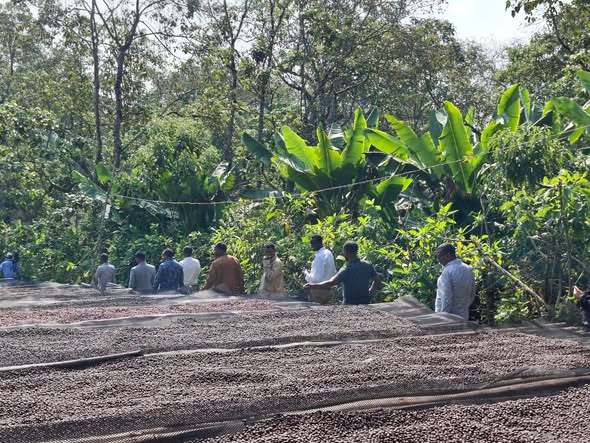
This trend aligns with a Coffee Tourism media press trip arranged by the Ministry of Tourism, which this week involved site inspections of coffee cultivation regions in Shasha Kebele within Goma Woreda.
This effort is an element of a countrywide campaign aimed at establishing Ethiopia's coffee regions as tourist spots in addition to boosting exports.
During his visit, Abdi Mohamed Nour, the Deputy Head of the Jimma Zone Agriculture Office, stated that coffee continues to play a vital role in both daily life and economic efforts within the community.
"coffee serves not just as a means of living but is deeply embedded in the culture and everyday lives of the people from Jimma," he stated.
Our emphasis on excellence and efficiency is helping farmers while also paving the way for coffee-related travel,
Abdi mentioned, noting that enhanced coffee development initiatives are being implemented throughout the area, with meticulous oversight from harvest to processing and then to shipment.
He stated that farmers are receiving enhanced and tested saplings, while contemporary methods of cultivation and post-harvest management are increasing to enhance both output and standard.
These initiatives are actively promoting the development of coffee tourism," he further stated. "Travelers seek to visit coffee plantations, witness production techniques, and immerse themselves in the culture tied to coffee. This contributes an exclusive economic benefit outside of traditional exports.
Officials from the Jimma Zone Agricultural Department state that increased output is now leading to improved access to markets.
Senior specialist Mohamed Sefa Kedir stated that agricultural producers are gaining advantages from international trade prospects with rising output.
"When output increases, agricultural producers earn higher revenues and have better connections with international markets," he stated.
At the national level, Ethiopia's coffee industry maintains robust performance, backed by initiatives driven by the Ethiopian Coffee and Tea Authority. As of January 1, 2026, the organization highlighted ongoing efforts to enhance efficiency and product standards are resulting in measurable improvements in output, trade volumes, and revenue from overseas markets.
Acting Deputy Head of the organization, Shafi Omar, stated to ENA that significant initiatives have been undertaken in recent years to increase production.
"Enhancing production has been greatly achieved through replacing aging coffee plants with better strains, adopting advanced techniques, and cultivating saplings as part of the Green Legacy Initiative," he highlighted.
As per official figures, Ethiopia made $1.6 billion from coffee exports within the initial five months of the 2025/26 financial period, with intentions to surpass $3 billion by selling approximately 600,000 tonnes of coffee throughout the entire year.
Ethiopia's main export markets consist of countries such as Germany, Saudi Arabia, and Belgium, whereas specialty and region-specific Ethiopian coffee remains highly sought after in Europe, Asia, and North America.
Coffee is cultivated in various areas throughout the nation, including the Oromia, Southern Ethiopia, Sidama, and Southwest Ethiopia regions.
Key production regions encompass Jimma, Illubabor, Guji, West Wollega, and East Wollega within Oromia, Sidama and Gedeo in the southern region, Bench Sheko, Kaffa, and Sheka in the southwestern area, along with Bale and Borena zones.
The varied backgrounds of these products are recognized worldwide for their unique taste characteristics and conventional manufacturing methods.
Local initiatives reflect the nationwide initiative. In the Bale Zone, Deputy Head of the Agricultural Office, Muawiya Fuad, stated that focused actions have enhanced both quality and output.
Coffee is cultivated across more than 68,000 hectares in this region, yielding over 407,400 quintals, which accounts for 93 percent of the set objective.
The area intends to provide 15,000 tonnes of coffee to the main marketplace.
Over 600,000 square meters of coffee drying mesh areas have been set up throughout the Bale Zone by individual entrepreneurs and organizations to improve product standards, as growers participate in ongoing education about cultivation and processing after harvest.
The Prime Minister, Abiy Ahmed, lately informed the House of People’s Representatives that domestic coffee output has significantly increased from 4.5 million to 11.5 million quintals.
Although domestic demand increased, exports brought in approximately 2.5 billion dollars during the previous financial year, whereas they only reached roughly 700 million dollars in the initial stages of economic reforms.
With ongoing improvements in productivity, quality, and exports across the country, authorities mention that coffee tourism is becoming an additional prospect, especially in traditional coffee-growing regions like Jimma.
"the cumulative effect of increased output, robust exports, and rising tourist attention indicates that coffee continues to play a vital role in ethiopia's economic structure and international reputation," abdi mohamed nour stated.
 Supplied by SyndiGate Media Inc. (
 Syndigate.info
).
Syndigate.info
).

0 Komentar